Mastering the Mix: How Personal Projects Supercharge Your Design Portfolio (2025 Guide)
You know the feeling. It’s the classic “chicken and egg” problem that keeps junior designers up at night: You need a job to get experience, but you need experience to get a job. It feels like an impossible loop to break.
In my years of reviewing portfolios and mentoring designers, I’ve seen countless talented creatives stall their careers because they were waiting for permission. They were waiting for a client to give them a brief that proved they could do the work. But here is the thing: You don’t need a client to be a designer. You just need a problem to solve.
Enter the personal project—your career accelerator.
If you execute them correctly, personal projects are not just “filler” for a thin portfolio; they are arguably the most powerful tool you have to control your narrative. They allow you to demonstrate the exact skills hiring managers are desperate for, without the red tape of NDAs or the limitations of a boring corporate brief. But be warned: there is a right way and a very wrong way to do this.
In this guide, we are going to dismantle the “fake work” myth and give you a structured roadmap to building personal projects that actually get you hired in the competitive 2025 landscape.
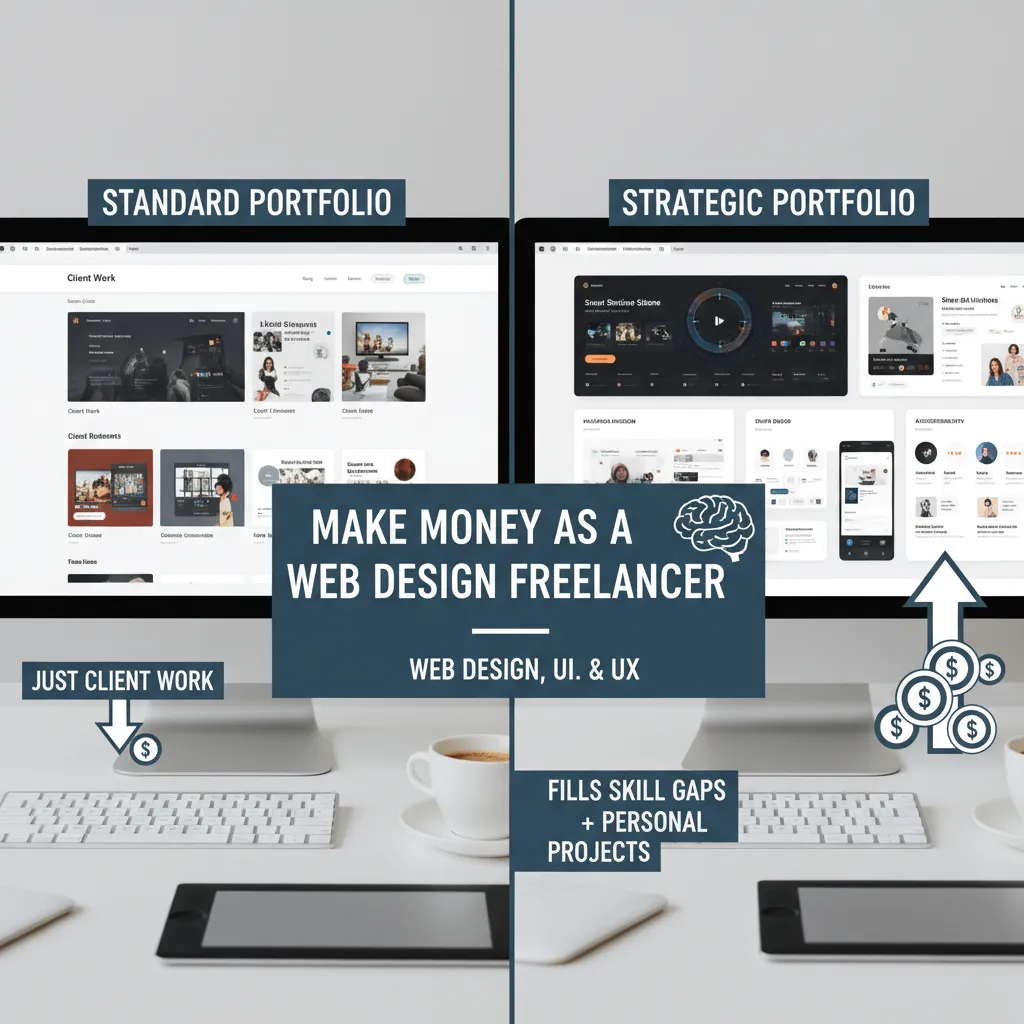
The “Fake Work” Myth: Do Hiring Managers Actually Care?
Let’s address the elephant in the room immediately. You might be wondering, “Do employers really respect work that wasn’t paid for?”
The answer is a resounding yes—but with conditions. The landscape of design hiring has shifted dramatically over the last few years. As we moved into 2024 and 2025, the market became saturated, and degrees started mattering less than demonstrable problem-solving ability.
The Statistics: What the Data Tells Us
Don’t just take my word for it. The data supports the pivot toward portfolio-first hiring. According to the UX Design Institute’s State of UX Hiring Report 2024, 74% of recent hires stated that their portfolio was the most critical factor in landing their first UX role, significantly outpacing university degrees.
With a 71% decrease in junior UX job postings recorded between 2022 and 2024, personal projects have become the primary differentiator for candidates lacking agency experience.
This data indicates that hiring managers are less concerned with who paid you, and more concerned with how you think. In a market where junior roles are scarce, a well-executed personal project signals initiative—a trait that is surprisingly hard to find.
Quality vs. Quantity: The Sweet Spot
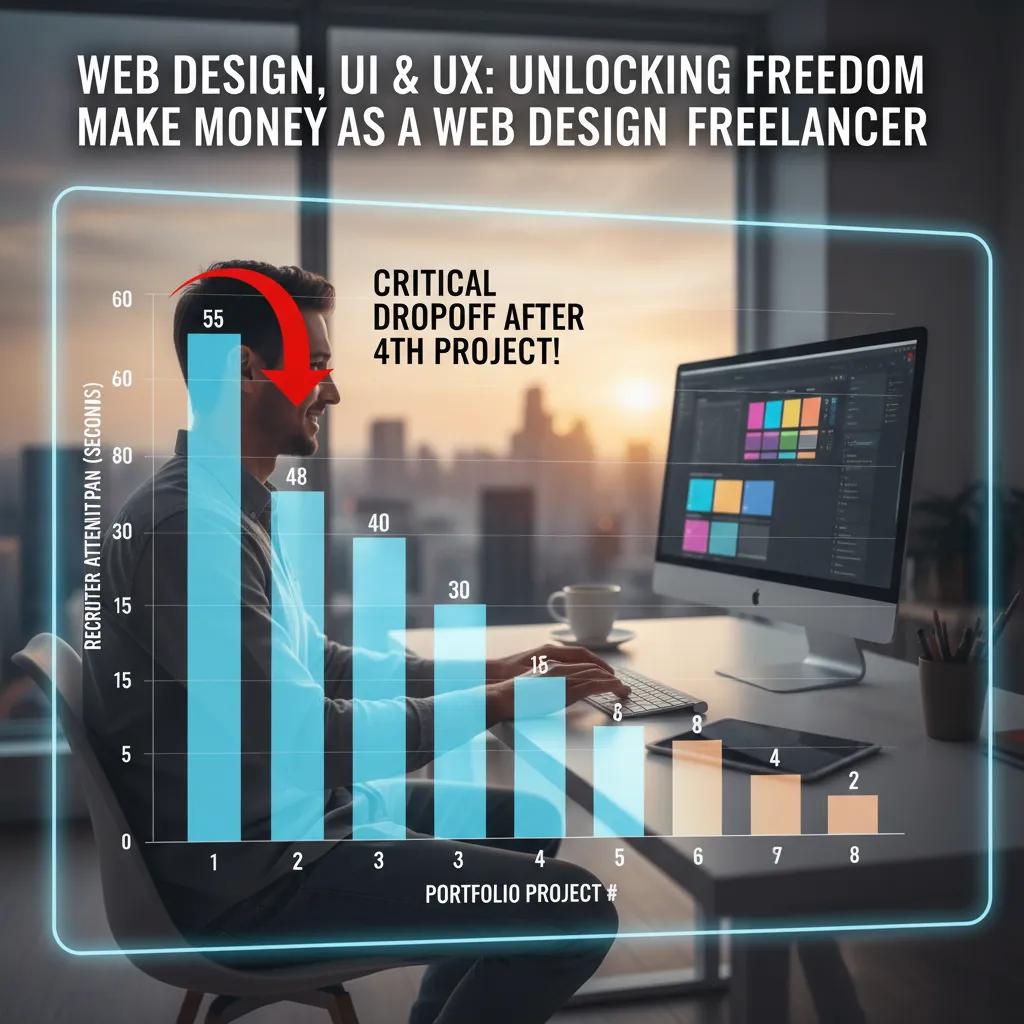
A common mistake I see is designers stuffing their portfolios with every sketch they’ve ever made. Please, don’t do this. Recruiters are overwhelmed. According to Nielsen Norman Group’s Portfolio Best Practices, recruiters spend an average of less than 3 minutes per portfolio. They don’t have time to sift through 20 projects.
The NNG research suggests the optimal number of showcased projects is between 4 and 6 strong case studies. If you have two client projects, adding two high-quality personal projects brings you right into that “hirable” sweet spot.
3 Types of Personal Projects That Get You Hired
Not all side hustles are created equal. If you want to impress a Creative Director, you need to be strategic about what you build. Generally, winning personal projects fall into three categories.
1. The “Gap Filler”
This is the most strategic approach. Look at the job descriptions for the roles you want. Do they ask for “Motion Design” or “Accessibility Standards,” but your current portfolio only has static, standard UI? Create a project specifically to demonstrate that missing skill.
This directly addresses a major pain point in hiring. According to the LinkedIn Learning Workplace Learning Report 2024, hiring managers listed “Initiative” and “Critical Thinking” as top missing soft skills in junior applicants. A “Gap Filler” project proves you have the self-awareness to identify your weaknesses and the initiative to fix them.
2. The “Passion Play”
These are projects born from your genuine hobbies—a hiking app, a knitting pattern organizer, or a fan site. These work because your enthusiasm shines through the details. They also demonstrate “culture fit.”
Historically, this has been a proven path to success. Ji Lee, a former Creative Strategist at Facebook and Instagram, famously credits his “Bubble Project”—a personal street art initiative—as the catalyst for his tenure at Google and Facebook. It proved he was creatively curious beyond the 9-to-5 grind.
3. The “Unsolicited Redesign”
This is risky but high-reward. This involves taking an existing product (like Spotify or Craigslist) and fixing it. However, you must tread carefully here. Simply making it “look pretty” is not enough.
Hiring Manager Insight (r/graphic_design, Oct 2024)
“If you want to work a corporate job, your book should feature things your future employers want to see… I need to understand you’ll be able to make a compelling creative, not a compelling illustration of a boy with wings.”
How to Structure a Personal Project Case Study (The Framework)
The design is only half the battle. The story of how you got there is what lands the interview. Since you don’t have a real client, you must simulate the professional environment. Here is the framework I recommend for 2025 portfolios.
The Disclaimer: Honesty is Non-Negotiable
First, label the work clearly. Call it “Concept Work,” “Personal Project,” or “Student Project.” Never mislead a recruiter into thinking a concept was a shipped product. Trust is fragile; don’t break it before the interview even starts.
Simulating Constraints
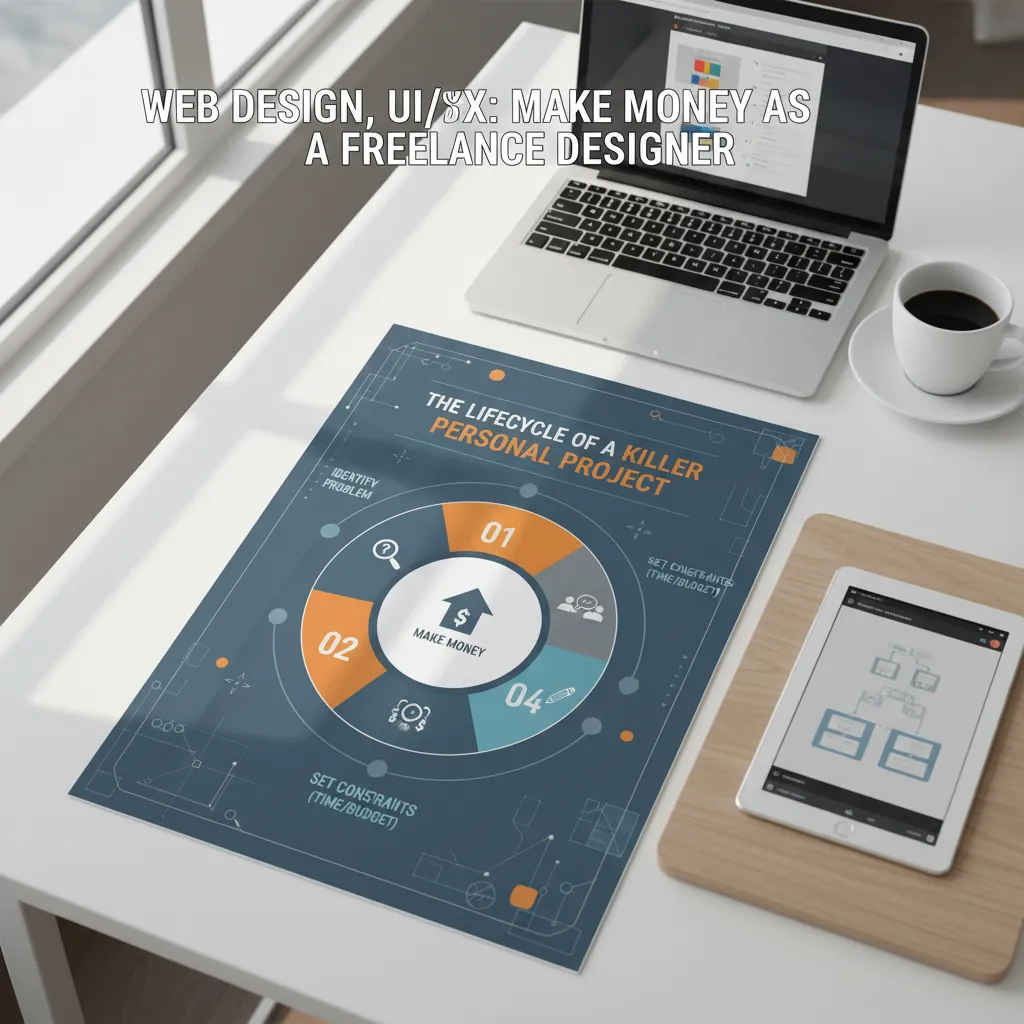
The biggest criticism of personal work is that it exists in a vacuum. In the real world, we have budgets, deadlines, and stubborn stakeholders. You need to impose these on yourself to make the project credible.
📋 The Validation Checklist
Before you open Figma, answer these questions in your case study intro:
- The Timeline: “I gave myself a strict 2-week sprint to complete this MVP.”
- The Persona: “I didn’t design for myself; I designed for [Specific User Segment] based on data from [Source].”
- The Business Goal: “The goal wasn’t just usability; it was to increase retention by X%.”
Jared Spool, a leading expert in usability engineering, frequently emphasizes that for hiring managers, the process often outweighs the pixels. He notes that employers want to know: Did you validate your assumption? Did you test your prototype? That is what they hire for.
The “Retrospective” Section
End your case study with a “What I learned” or “What I’d do differently” section. This shows maturity. It admits that the design isn’t perfect—which no design ever is. It shows you have a growth mindset.
Critical Mistakes to Avoid with Side Projects
Even with good intentions, I’ve seen designers sabotage their chances by falling into common traps.
The “Dribbble Shot” Trap
Dribbble is great for inspiration, but it has created a generation of designers who focus on visuals without context. A beautiful screen that is unusable is art, not design. Avoid posting high-fidelity mockups without showing the wireframes, the messy sketches, and the failed iterations that led you there.
Ignoring Business Goals
You are likely applying for a job at a business that needs to make money. If your personal project is purely altruistic or artistic without any consideration for conversion rates, user retention, or technical feasibility, you might be labeled as “not ready for commercial work.”
According to Ronan Costello, Director of Experience Design at Analog Devices, the demand for UX skill sets remains strong because they play a central role in how virtual and physical worlds intertwine. This means your work needs to be grounded in reality, showing you understand how design impacts the bottom line.
The “NDA Gap”: A Strategy for Senior Designers
You might think personal projects are just for juniors. I disagree. In my experience, senior designers often face the “NDA Gap”—they have spent 5 years doing incredible work that they legally cannot show anyone.
Personal projects are the solution. They allow senior designers to:
- Showcase familiarity with modern tools (like AI prototyping or Framer) that their corporate employer might be too slow to adopt.
- Demonstrate leadership by mentoring a junior on a collaborative side project.
- Pivot industries (e.g., moving from Fintech to EdTech) by creating a relevant concept piece.
Leveraging AI in Personal Projects (The 2025 Edge)
Here is a fresh angle for 2025 that most competitors aren’t talking about yet. Don’t just use AI to generate stock images.
Use AI to simulate the stakeholders you don’t have. You can prompt ChatGPT to act as a “Difficult CEO” who questions your design decisions. Document this interaction in your case study! It shows you can handle feedback and defend your design rationale—a critical soft skill.
FAQ: Common Questions About Portfolio Projects
Should I include hobby work in my design portfolio?
Yes, but keep it in a separate “Playground” or “About Me” section unless it is a full case study. It adds personality, but shouldn’t distract from your core UX/UI capabilities.
How many personal projects should be in a portfolio?
Aim for a mix. If you have zero experience, 3-4 deep personal projects are necessary. If you have some client work, 1-2 personal projects are enough to show passion and skill breadth.
Do hiring managers value concept work?
They value good concept work. As mentioned earlier, if you treat it like a real project with constraints and research, it is often valued just as highly as client work, sometimes more so because it shows pure skill without client interference.
Conclusion: Start Building This Weekend
The debate is settled: Personal projects are not just acceptable; they are often the deciding factor in a competitive market. They are your proof of curiosity. They show that you are a designer because you love design, not just because you want a paycheck.
Remember, the goal isn’t to create a perfect app that launches on the App Store. The goal is to create a perfect case study that launches your career.
So, stop waiting for permission. Pick a problem that annoys you, set a two-week deadline, and start designing. Your future hiring manager is waiting to see what you can do.