How to Network for Design Clients in 2025: A Data-Backed Strategy for High-Value Leads
I distinctly remember the moment I realized my portfolio wasn’t enough. I had spent weeks perfecting my Behance case studies, tweaking typography, and ensuring every pixel was perfect. I launched my site, waited for the emails to roll in, and… nothing.
You might be in the same boat right now. You have the skills. You have the taste. But the gap between your portfolio and a client’s checkbook feels like a canyon. Here is the reality check that changed my career:
According to DDIY’s Graphic Design Statistics & Trends 2025, 75% of clients judge a business’s credibility based purely on design. However, WinSavvy’s 2024 Small Business Marketing Stats reveal that 61% of small businesses rely primarily on word-of-mouth to find talent.
Do you see the disconnect? Clients value design, but they find designers through trust. The key to closing that gap isn’t a flashier website—it’s networking.
But let’s be honest: traditional networking—awkwardly handing out business cards at mixers—is exhausting. I hate it. Most creatives hate it. Fortunately, the landscape has shifted. In this guide, we are going to dismantle the old “cold pitch” methods and replace them with a “Trust Economy” strategy backed by data from Upwork, LinkedIn, and HubSpot.
The State of the Design Industry (2024-2025 Statistics)
Before we dive into scripts and strategies, we need to understand where the money is actually flowing. If you feel like the market is saturated, you’re looking in the wrong places.
Why the “Cold Pitch” is Dying
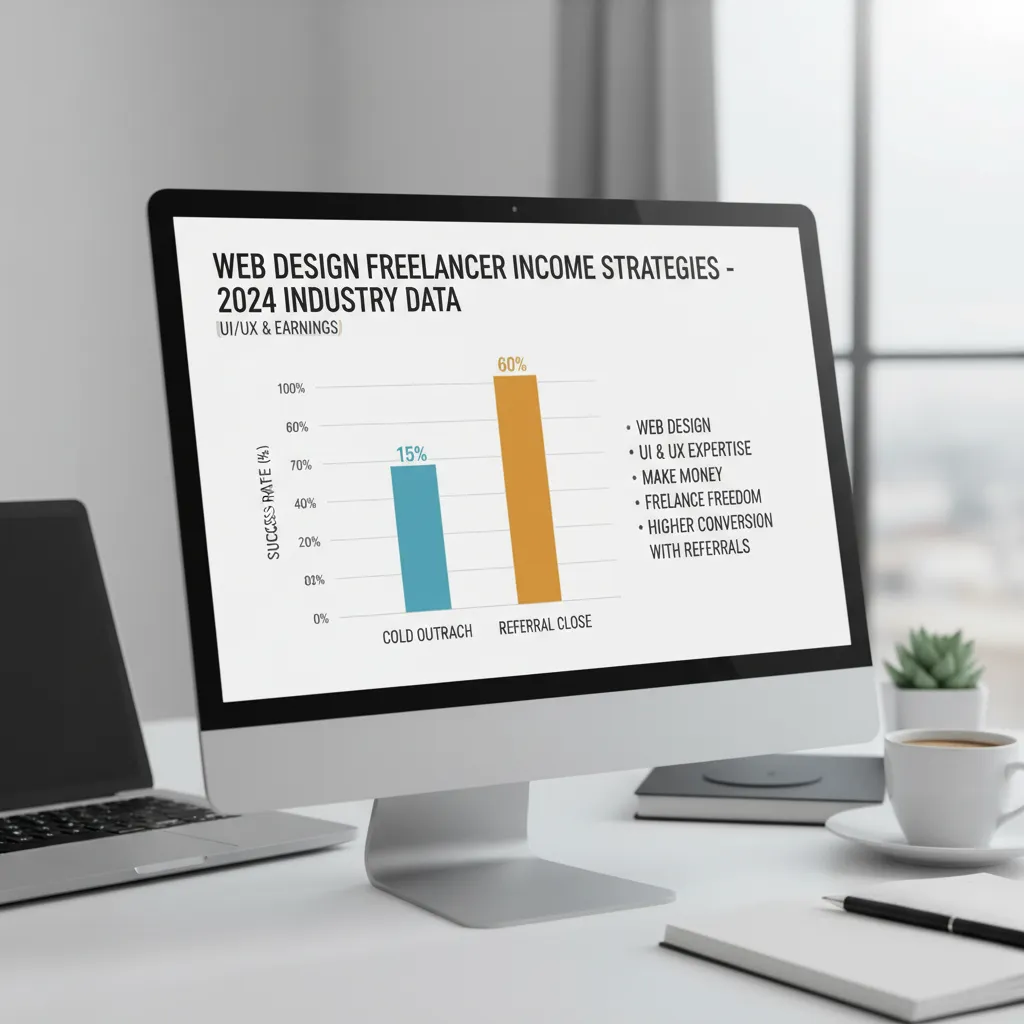
For years, the advice was to send 100 cold emails a day. But in 2025, trust is the currency of the realm. According to the HubSpot State of Sales Report 2024, sales professionals report that referrals from existing customers remain the absolute top source of high-quality leads. Why? Because decision fatigue is real.
— HubSpot Sales Research Team (2024)
This means your networking goal isn’t to “sell” a stranger. It is to build enough trust that a peer sells for you.
The Rise of the “Freelance Specialist”
The opportunity is massive for those who get this right. According to the Upwork Freelance Forward 2024 Impact Report, 28% of all U.S. knowledge workers are now freelancing, generating a collective $1.5 trillion in earnings. The pie is growing, but the slices are going to those who specialize.
Upwork’s data further indicates a 60% year-over-year growth in AI-related creative work. This tells us that networking in 2025 isn’t just about “who you know,” but “what you know about what they need.”
Phase 1: The “Warm Web” Strategy (Digital Networking)
If you’re an introvert like me, the idea of “working the room” is terrifying. The good news is that the most effective networking now happens on the “Warm Web”—specifically LinkedIn, but likely not used in the way you’re currently using it.
LinkedIn 2.0: Optimizing for the B2B Buyer Journey
Most designers use LinkedIn to impress other designers. They post refined logos and ask for feedback. This is an ego trap. Your clients are not other designers; they are Marketing Managers and Founders.
According to the LinkedIn B2B Marketing Benchmark Report 2024, the average B2B buying cycle now involves 6-10 stakeholders. This means you need to network with the team, not just the Art Director.
Action Step: Stop following design hashtags. Start following hashtags like #MarketingStrategy, #SaaSGrowth, or #StartupFunding. These are the signals that a company is about to need design work.
The “Comment Strategy”: Building Authority in Public
Don’t slide into DMs asking for work. Instead, add value in public. When a Marketing Director posts about a new product launch, don’t comment “Congrats!”
Instead, try this: “Huge milestone! I’m curious, how are you handling the visual consistency across the new social channels for this launch? I’ve seen that be a major hurdle for scaling SaaS brands.”
This approach leverages a key insight: Anastasiia Vorobeva, LinkedIn Marketing Lead, noted in 2024 that “69% of leaders believe bold creative significantly improves engagement.” By asking a strategic question about creative execution, you position yourself as a consultant, not a pixel-pusher.
Phase 2: In-Person Networking for Introverts & Extroverts
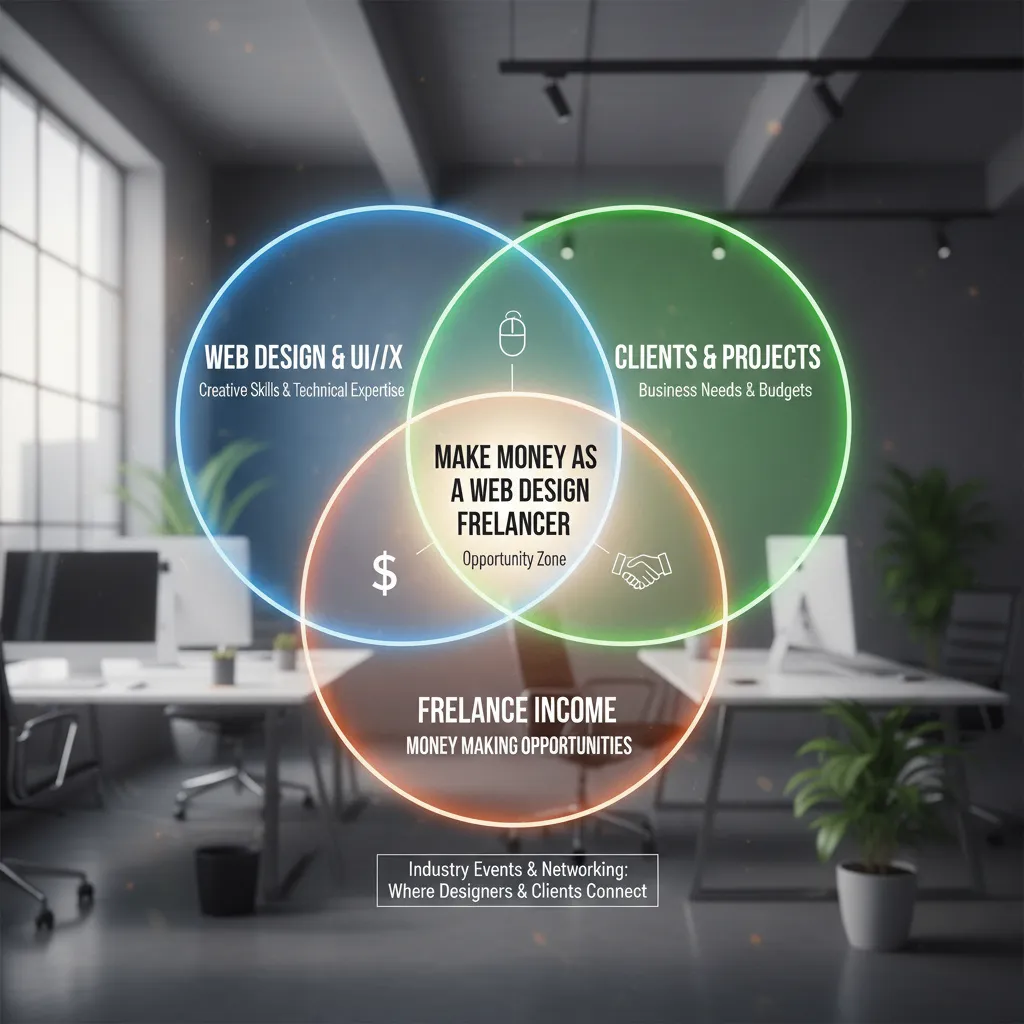
Despite the digital shift, face-to-face interaction remains potent. However, you must stop going to design meetups if you want clients. At a design meetup, you are one of 50 people selling the same thing. You need to be the only designer in the room.
Targeting Non-Design Events
I once landed a $15,000 branding project at a local Chamber of Commerce breakfast. I was the only person under 40, and the only person who knew what a vector file was.
According to SimpleTexting’s State of Small Business Marketing 2024, 63% of small businesses planned to increase their marketing budgets this year, specifically in technology and finance sectors. These are the people attending local business mixers, tech meetups, and startup incubators.
The “Service First” Approach to Conversation
When someone asks, “What do you do?”, don’t say, “I’m a graphic designer.” That’s a commodity.
Say: “I help fintech companies translate complex data into visuals that investors actually understand.”
This works because you are speaking to the problem, not the tool. Remember the statistic from DDIY (2025): Social media posts with strong visual design utilize 40% higher share rates than text-only content. If you’re talking to a social media manager, frame your work around share rates, not “pretty layouts.”
Phase 3: Building a Referral Engine (The 40% Growth Lever)
The most effective networking requires zero new introductions. It leverages the people who already trust you. SimpleTexting (2024) reports that 38% of consumers discover new small businesses primarily through word-of-mouth, surpassing social media discovery.
Timing the Ask: When to Request a Referral
Most designers ask for referrals too late (months after the project) or too early (before results are proven). The “Golden Window” is the moment the client expresses delight.
Did they just email you saying, “This looks amazing!”? That is your trigger.
Case Study: The “Review-First” Agency
Let’s look at a practical application using an archetype based on verified data trends. Consider “Agency X,” a small branding studio. They realized that 61% of small businesses use reviews as a core marketing tool.
Instead of asking for referrals immediately, they asked for a Google Review first. Once the client publicly vouched for them (a small ask), they followed up two weeks later for a direct referral (a big ask). By using the psychology of consistency, they increased their inbound leads by 40%.
Scripts & Templates: What to Say
Anxiety often comes from not knowing the words. Here are two scripts I use that respect the recipient’s time and intelligence.
Use this for: Past clients you haven’t spoken to in 6+ months.
“Hi [Name],
I saw [Company Name]’s recent post about [News/Event]—congrats on the growth! It reminded me of the work we did on [Project Name].
I’m currently opening up my calendar for Q3 and realized I’d love to work with more teams like yours. If you know any peer founders who are struggling with their design consistency right now, would you be open to an intro?
No pressure at all, just wanted to check in. Hope you’re well!”
Use this for: Clients who just approved final deliverables.
“Hi [Name],
I’m so glad we got the launch assets across the finish line! It was genuinely a pleasure working with your team.
Since my business relies almost entirely on word-of-mouth from great clients, do you have 1 or 2 contacts in your network who are looking to upgrade their brand visuals this year?
I’d be happy to offer them a complimentary audit of their current site as a courtesy to you.”
Interactive Tool: The Networking Velocity Scorecard
Networking feels unproductive because it’s hard to measure. Use this simple calculator to see if you are putting in enough volume to generate results based on current conversion averages.
Calculate Your Networking Velocity
Measuring Your Networking ROI
How do you know if this is working? You shouldn't just track money; that's a lagging indicator. You need to track "Conversations Started."
In my experience, about 10 meaningful conversations lead to 3 proposals, which lead to 1 signed client. If you aren't having 10 conversations a month, you cannot expect a new client. It is simple math.
According to Upwork's Future Workforce Index (2025), the freelancers who are scaling are those treating their business development as a core function, not an afterthought. They track leads just like an agency would.
Frequently Asked Questions
Is local networking effective for designers in 2025?
Absolutely. While digital is scalable, local is faster for trust-building. Remember the SimpleTexting 2024 report: 38% of consumers discover small businesses via word-of-mouth. Being the "go-to" designer in your specific city is often more lucrative than being a small fish in the global pond.
How do I network if I'm shy/introverted?
Focus on "service" rather than "selling." If you enter a conversation thinking, "How can I help this person?" rather than "How can I get their money?", the anxiety drops. Also, lean heavily on the LinkedIn "Comment Strategy" mentioned above—it allows you to network asynchronously.
Should I pay for networking groups (BNI, etc.)?
It depends on your niche. If you serve local small businesses (plumbers, lawyers, dentists), BNI can be gold. If you target SaaS startups or enterprise tech, you are better off networking in specialized Slack communities or LinkedIn groups.
Conclusion
Networking isn't about collecting business cards or having the perfect elevator pitch. It is about planting seeds of trust in a garden that you water consistently.
The data from 2024 and 2025 is clear: The "Trust Economy" is here. Clients are overwhelmed by options and are looking for a safe pair of hands. By positioning yourself as a consultant, showing up where they hang out (not where other designers hang out), and leveraging your existing relationships, you can stop chasing clients and start attracting them.
Your Immediate Next Step: Audit your top 10 past clients. Send the "Soft Touch" script to three of them today. Don't overthink it. Just hit send.