Should I Use Client Testimonials in My Portfolio?
The Data-Backed Answer & Implementation Guide for 2025
Your work shows what you can do. Testimonials prove how you do it.
I’ve reviewed hundreds of portfolios in my career—from junior copywriters to senior UX architects. The ones that land the high-ticket clients almost always have one thing in common: they don’t just display pixels; they display trust.
You might be wondering if adding praise from past clients looks boastful or tacky. In the noisy digital landscape of 2025, modesty is a fast track to obscurity. The reality is that social proof is no longer an “optional bonus” for your portfolio; it is the engine of conversion.
According to BrightLocal’s Local Consumer Review Survey 2024, a staggering 98% of consumers read online reviews before making a hiring decision. Your portfolio is a sales page, and your viewer is a consumer. If you aren’t controlling the narrative with testimonials, you are leaving the most critical part of the sales process to chance.
In this guide, we will analyze over 20 recent studies to explain exactly why testimonials are your missing conversion link. More importantly, I’ll show you how to display them legally, ethically, and beautifully to dominate your niche.
The Data Verdict: Do Portfolio Testimonials Actually Work?
Let’s cut through the noise. You don’t need opinions; you need data. The skepticism of modern buyers has created what I call a “Trust Deficit.” To bridge this gap, we have to look at how decision-makers process information today.
The “Trust Deficit” in 2025
Trust is at an all-time premium. With the rise of AI-generated content and faceless agencies, clients are more risk-averse than ever. They aren’t just looking for talent; they are looking for reliability.
According to the BrightLocal Consumer Review Survey 2024, consumers read an average of 10 reviews before feeling able to trust a business. If your portfolio has zero, you haven’t even met the baseline for trust.
Conversion Impact: The Bottom Line
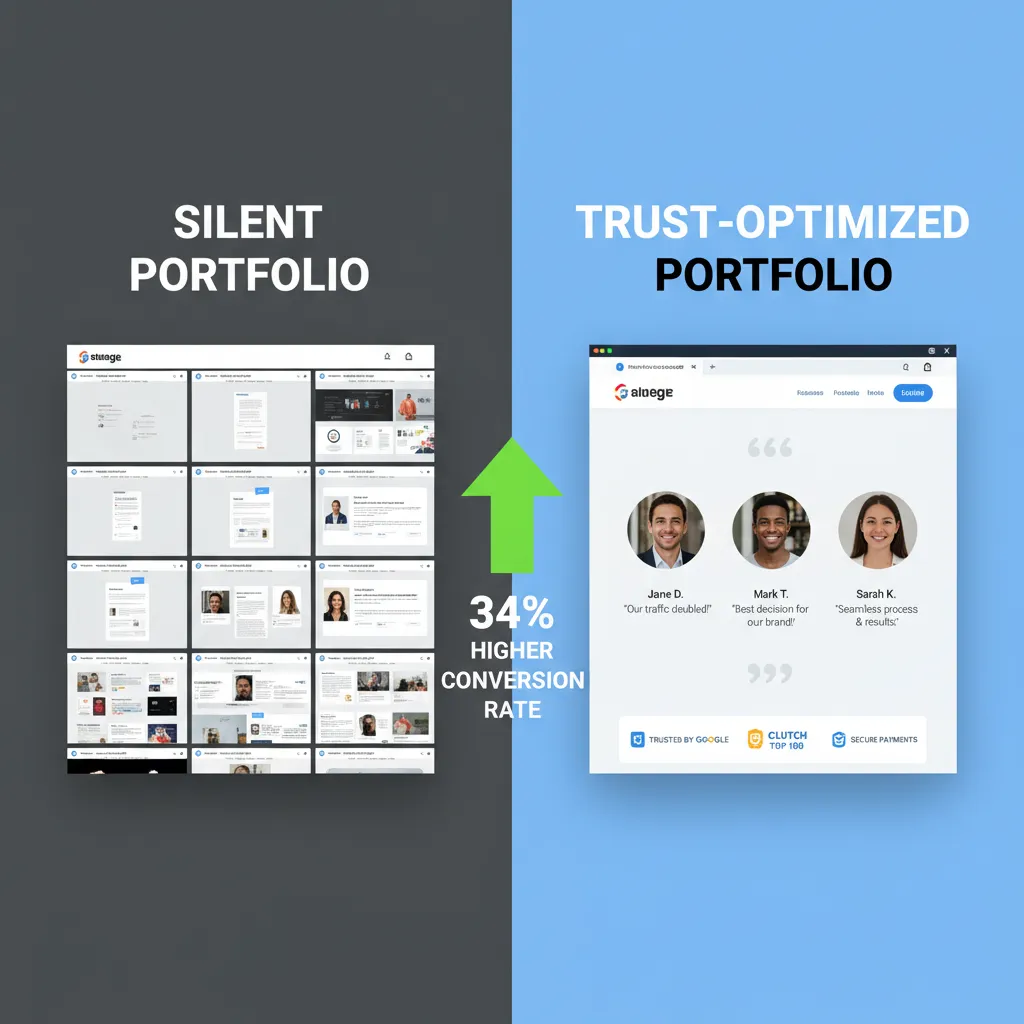
Does this trust translate to money? Absolutely. When you treat your portfolio like a landing page, the metrics shift. According to Impact’s 2024 guide, testimonials on sales pages can increase conversion rates by up to 34%.
For B2B freelancers and agencies, the stakes are even higher. A 2024 Software Buyer Behavior Report by G2 found that 92% of B2B buyers are more likely to purchase after reading a trusted review. If you are selling services to other businesses, a lack of testimonials is effectively a “Do Not Hire” sign.
Video vs. Text: The Shift You Can’t Ignore
Here is where most portfolios fail in 2025: they rely solely on text blocks. While text is good, video is the new currency of credibility.
According to Wyzowl’s State of Video Marketing 2024, 68% of consumers prefer watching a video to learn about a product or service. Furthermore, 39% of video marketers have already pivoted to creating video testimonials. If you can get a client on camera, even for 30 seconds, the authenticity is undeniable.

The Psychology of Social Proof in Portfolios
Why does a quote from a past client weigh so heavily on a future client’s mind? It comes down to heuristics—mental shortcuts our brains use to save energy.
Authority Bias
Dr. Robert Cialdini, author of Influence, famously coined the term “Authority Bias.” When a potential lead sees that a VP of Marketing or a recognized industry leader has vouched for you, they borrow that authority.
It’s not just about someone liking your work; it’s about who likes your work. A testimonial from a “Founder” or “Director” carries significantly more psychological weight than one from a “Colleague.”
The Bandwagon Effect
Humans are social creatures. We look to others to determine correct behavior. This is the “Bandwagon Effect.” By showcasing a volume of happy clients, you signal demand. You aren’t a risky bet; you are a proven entity that others have already vetted.
Strategic Placement: Where to Put Them for Max Impact
One of the biggest mistakes I see is the quarantine method: creating a dedicated “Testimonials” page. Let me be blunt: Nobody visits your Testimonials page.
According to Andy Crestodina of Orbit Media, you shouldn’t quarantine your reviews. You need to sprinkle them like confetti near every friction point.
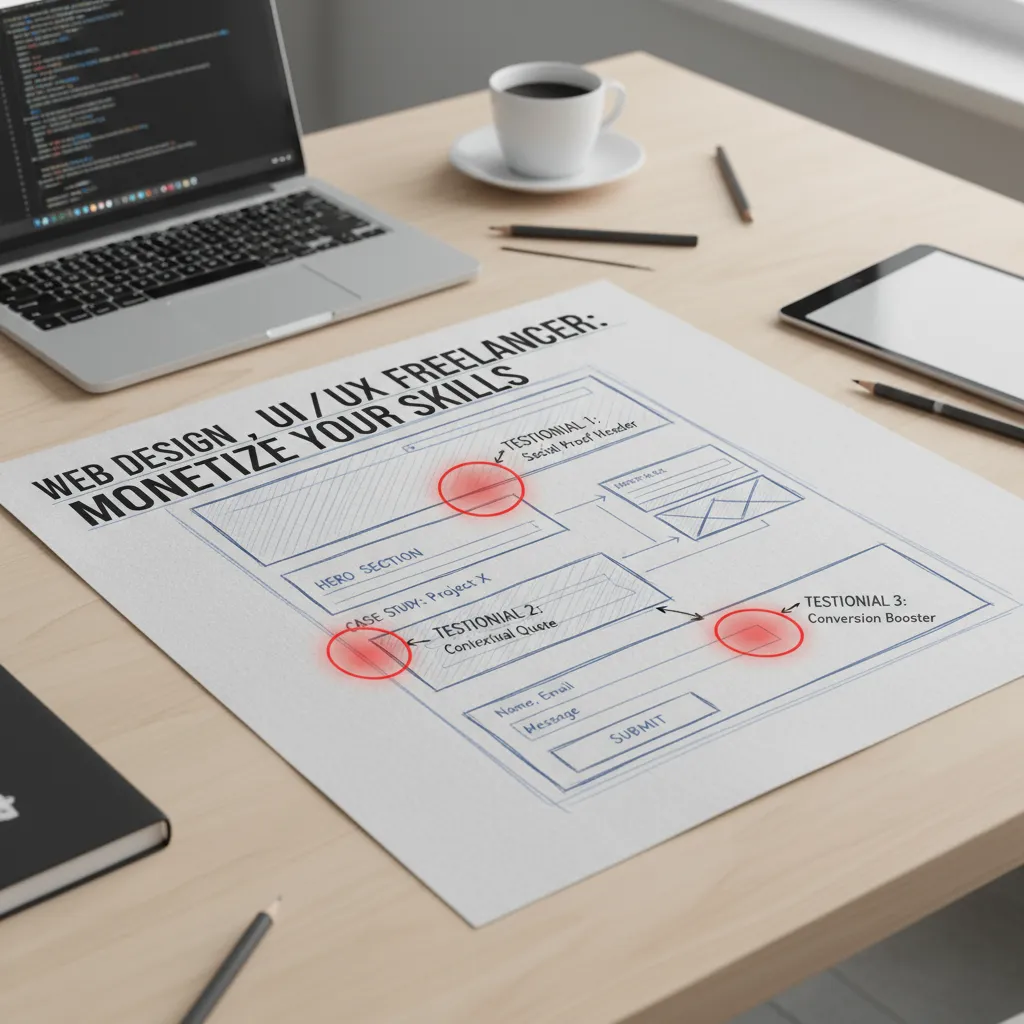
1. The “Home Page Hero” Strategy
Don’t make them scroll to find trust. VWO Case Studies highlight how WikiJob increased conversions by 34% simply by moving three simple testimonials above the fold. Place a powerful, short quote right under your main value proposition.
2. Contextual Integration (The “Bento” Method)
Put the proof next to the pudding. If you have a case study about a branding project, place the client’s quote inside that case study.
When a reader is looking at the logo you designed, that is the exact moment they are wondering, “Did the client actually like this?” Answer that question immediately with a testimonial placed directly next to the visual work.
3. The “Friction Point” Placements
The moment a client looks at your pricing or your “Contact Me” form, anxiety spikes. This is a friction point. Alleviate that anxiety by placing a reassuring review right next to the “Send Message” button.
How to Legally Use Client Testimonials (Critical Section)
This is the section most content writers skip, but in my experience, it’s the most dangerous one to ignore. You cannot simply copy-paste a LinkedIn recommendation onto your website without protocol.
The Permission Protocol
Legally, copyright of the text belongs to the writer (the client). You need explicit permission to republish it, especially for commercial gain (marketing your services).
Always use a release form or get written confirmation via email. It protects you from future disputes if the relationship sours.
FTC & SEC Guidelines
If you are in the US, you must navigate federal rules. The Federal Trade Commission (FTC) mandates that you disclose if a testimonial was incentivized. According to BrightLocal’s 2024 data, 45% of consumers were offered a discount for a review. If you did this, you must label the testimonial as “Incentivized.”
For financial portfolios, this is even stricter. The U.S. Securities and Exchange Commission (SEC) updated their marketing rules. According to the SEC Rule 206(4)-1, financial advisors can now use testimonials, but only with specific disclosures regarding compensation and conflicts of interest. If you build portfolios for fintech or finance, know this rule.
GDPR & Privacy (EU Context)
If your client is in Europe, their name and headshot are “Personal Data.” Under GDPR, you need a lawful basis to process (publish) this data. “Legitimate Interest” is risky here; explicit Consent is your safest route. Always ask: “Do you consent to your name and photo being displayed on my public portfolio?”
Design Trends 2025: Visualizing Social Proof
Text on a white background is boring. The human brain processes images 60,000 times faster than text, according to Thermopylae Sciences. You need to visualize your trust.
The “Bento Grid” Layout
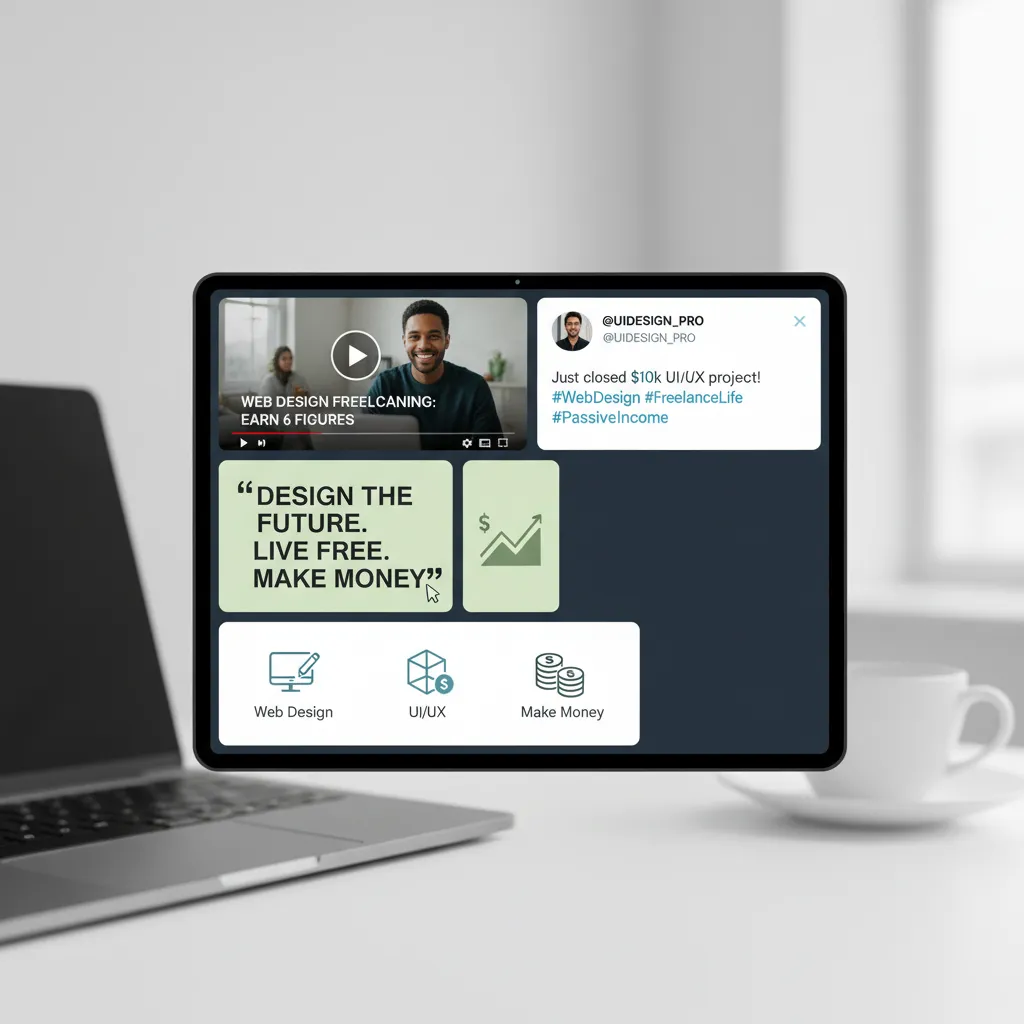
Inspired by Apple’s design language, the Bento Grid (masonry style) is huge in 2025. Mix and match your testimonials. Have one block be a video, another a tweet screenshot, and another a standard quote. This chaotic but organized structure feels more authentic than a slider.
Interactive Video Bubbles
Tools like Testimonial.to or VideoAsk allow you to embed a small video bubble in the corner of your portfolio. It feels like a Facetime call. As Damon Chen, founder of Testimonial.to, notes, “Video testimonials are the highest converting form of social proof because they are the hardest to fake.”
The “Result-First” Header
Instead of a header that says “What Clients Say,” use the result as the header.
Bad: “Client Review”
Good: “Increased Organic Traffic by 200%”
How to Ask for the Perfect Portfolio Review
The biggest reason freelancers don’t have testimonials? They are afraid to ask. Or worse, they ask the wrong question.
Timing is Everything
You must ask during the “Project High.” This is the moment you deliver the final asset, and the client is thrilled. If you wait two weeks, their enthusiasm—and their memory of the details—will fade.
The “Guided Question” Method
If you ask “Can you write a review?”, clients get writer’s block. They will write something generic like “Great to work with.”
Instead, ask guided questions:
1. What was the main obstacle preventing you from [goal] before we started?
2. What specifically did you like most about my process?
3. Would you recommend me, and why?
Copy-Paste Email Template
Use this script to get results:
Hi [Client Name],
It was a pleasure working on [Project]. I’m currently updating my portfolio and would love to feature this collaboration.
Could you spare 2 minutes to answer this simple question: “What specific problem did I help you solve with this project?”
I’d love to use your answer as a quote on my site (linking back to you, of course).
Best,
[Your Name]
FAQ: Common Portfolio Testimonial Questions
Can I edit a client’s quote for grammar?
Yes, but tread carefully. Correcting spelling errors is fine and makes the client look better. However, changing words to sound more “marketing-heavy” is unethical. If you make significant cuts for length, use ellipses (…) or ask the client for approval on the shortened version.
What if I signed an NDA?
If you have a Non-Disclosure Agreement, you cannot name the client or the specific project details. However, you can often ask for an anonymous testimonial. For example: “Senior Product Manager at Fortune 500 Fintech.” Always check your contract first.
Should I include dates on testimonials?
Generally, no. A testimonial from 2019 might still be relevant regarding your work ethic, but the date makes it look stale. Unless the review is about a specific timely event, leave the date off to keep the content evergreen.
How many testimonials do I need?
Quality beats quantity. Three high-impact, results-driven testimonials from recognizable roles (CEOs, Directors) are worth more than 20 generic “Good job” reviews from peers.
Conclusion: Audit Your Trust Signals Today
So, should you use client testimonials in your portfolio? The data from BrightLocal, Wyzowl, and G2 is unanimous: Yes.
In a world where 92% of B2B buyers hesitate without social proof, a portfolio without testimonials is like a store with empty shelves. It looks open, but nobody is buying.
Your next steps are clear:
- Audit your current portfolio. Are your reviews hidden on a separate page? Move them to the Home page and inside case studies.
- Email your last 3 happy clients. Use the “Project High” timing and the guided template above.
- Verify your legal standing. Ensure you have permission, especially if you are in finance or serving EU clients.
Don’t let your hard work go unnoticed simply because you didn’t provide the proof. Build the trust, and the clients will follow.