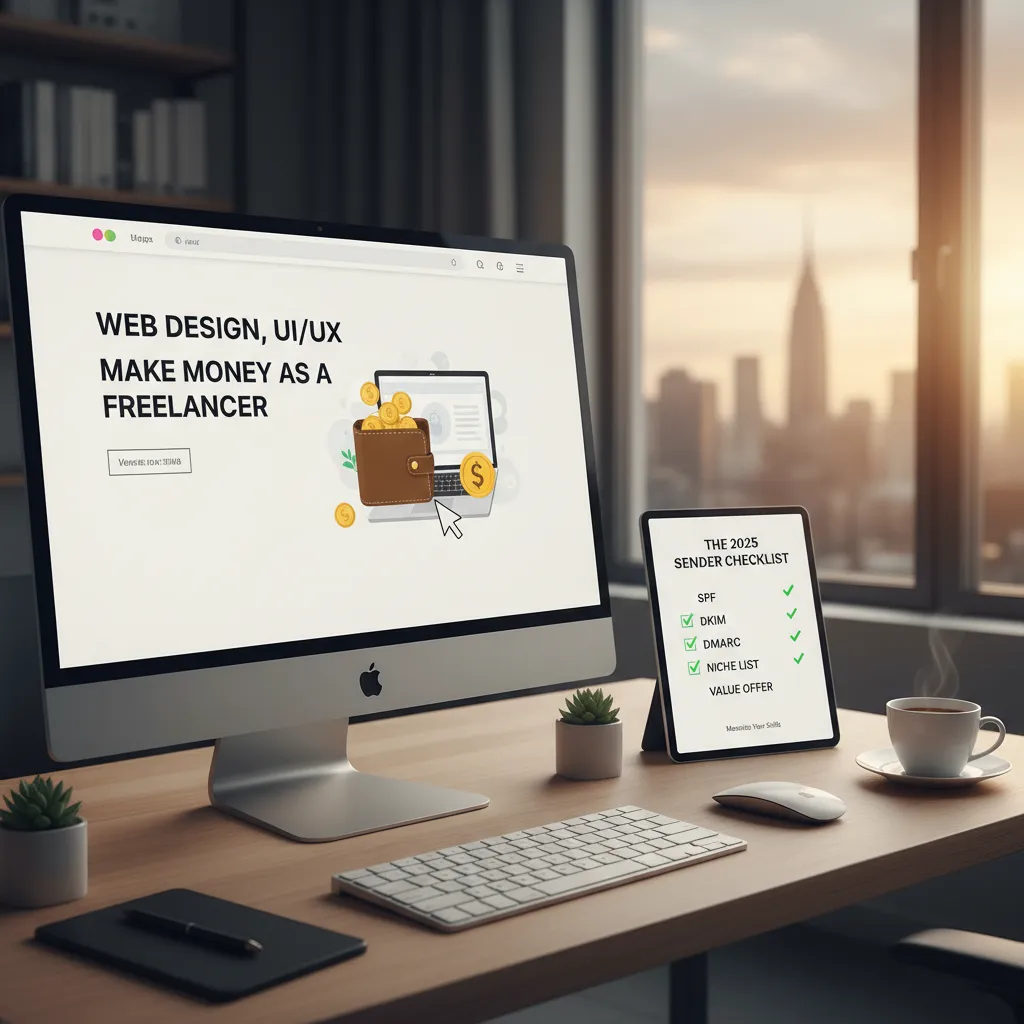
The Verdict: Does Cold Email Still Work for Web Design Leads in 2025?
By The Content Strategy Team | Updated October 2025
If you feel like your cold emails are vanishing into a black hole lately, you aren’t imagining things. The “Inbox Apocalypse” is real.
For years, web designers could scrape a list of local businesses, fire off 500 generic “I can redesign your website” emails, and land a few clients. That era ended abruptly in February 2024. According to data from the Martal Group’s 2025 Cold Email Statistics, average open rates plummeted from roughly 36% in 2023 to just 27.7% in 2024.
So, is cold email dead? Absolutely not.
In fact, despite the harder landscape, cold email remains the highest ROI channel available to B2B agencies. A 2025 industry analysis by Litmus and SalesSo indicates that for every $1 spent on cold email, the return is between 36% and $42. Try getting that return on Facebook ads today.
The answer isn’t “stop emailing.” The answer is to stop emailing like it’s 2023. The rules of the game have changed fundamentally, driven by technical mandates from Google and Yahoo. If you are a web designer looking for leads, this guide is your new rulebook.

The “Invisible Wall”: Why Old Tactics Fail (The 2024 Deliverability Update)
Here is the brutal truth most “lead gen gurus” won’t tell you: Your copywriting doesn’t matter if your email never hits the inbox.
In February 2024, Google and Yahoo implemented the strictest email mandates in history. Previously, things like SPF and DKIM were “best practices.” Now, they are the barrier to entry. As the deliverability team at Netcore Cloud stated in 2024, “Starting February 2024, Google and Yahoo will begin blocking incoming emails that don’t meet domain authentication… This isn’t optional anymore; it’s the barrier to entry.”
The Death of “Spray and Pray”
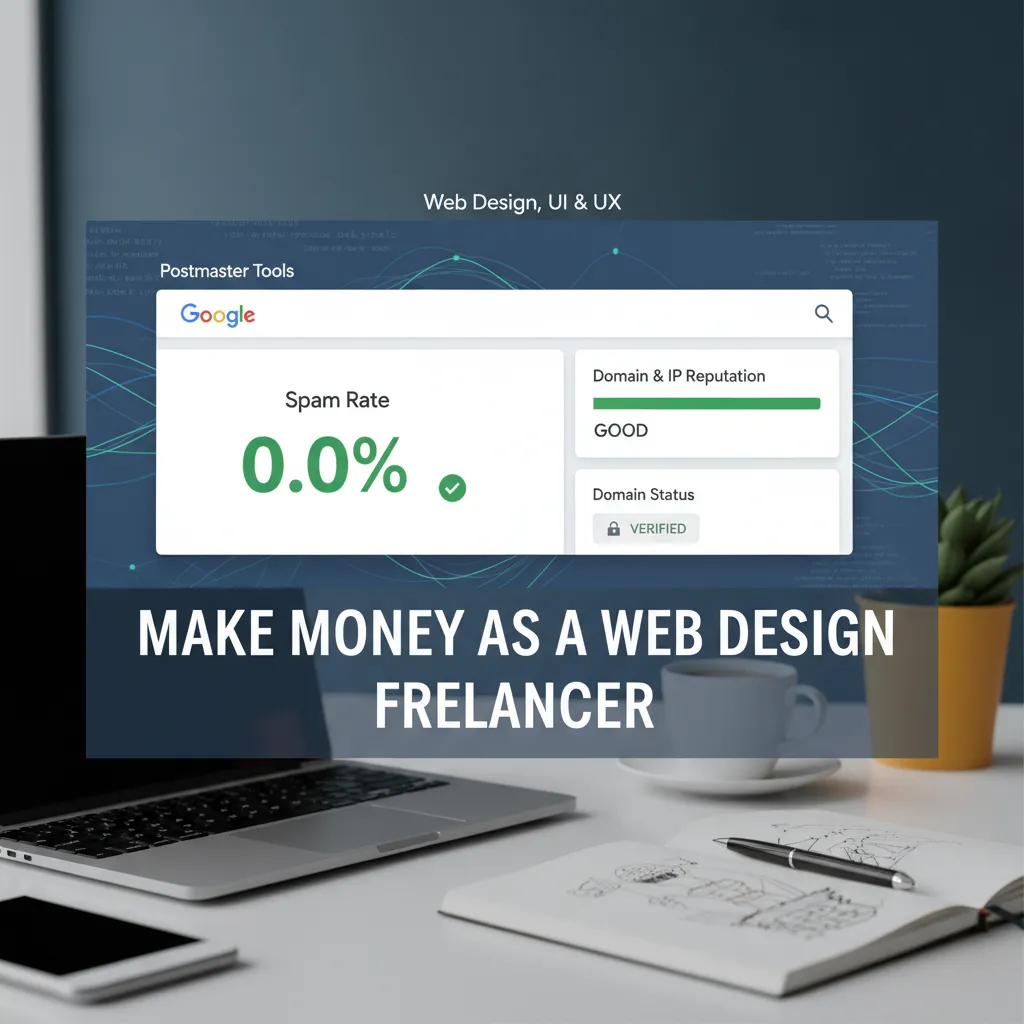
Before this update, you could get away with loose technical setups. Now, Google’s Email Sender Guidelines enforce a strict spam complaint threshold of 0.3%. That is zero-point-three percent.
To put that in perspective: If you send 1,000 emails and just three people mark it as spam, your entire domain could be blacklisted. Once your domain reputation is torched, even your invoices to existing clients will land in spam folders.
The Technical Trinity: SPF, DKIM, DMARC
If you don’t know what these acronyms are, you shouldn’t be sending cold emails yet. These are the digital passports that prove you are who you say you are.
- SPF (Sender Policy Framework): Specifies who is allowed to send email on behalf of your domain.
- DKIM (DomainKeys Identified Mail): Adds a digital signature to emails to verify they haven’t been tampered with.
- DMARC (Domain-based Message Authentication, Reporting, and Conformance): Tells receiving servers what to do if the first two checks fail.
Data-Driven Benchmarks: What Success Looks Like Now
I’ve seen too many web designers give up because they didn’t get a 50% reply rate. Let’s set realistic expectations based on verified 2025 data.
Reply Rates: The Reality Check
According to the Belkins “B2B Cold Email Response Rates Report” (2025), the average cold email reply rate has settled at 5.1%, down from 7% the previous year. If you are getting a 5% reply rate, you are winning.
The Power of Personalization
While the average is 5.1%, you can beat the odds. Data from Woodpecker’s 2025 analysis shows that advanced personalization—moving beyond just “Hi {{FirstName}}”—can boost reply rates up to 17%. Generic templates are mathematically guaranteed to fail.
Brevity Wins Contracts
How long should your pitch be? If you are writing paragraphs about your “passion for design,” stop. The Belkins 2025 Benchmark Report found that emails with 6-8 sentences achieve the highest response rates (42% open rate). Executives don’t read essays; they scan for value.
The 4-Step “Inbox-First” Strategy for Web Designers
Now that we understand the technical constraints, how do we actually get clients? Through my experience working with agencies, I’ve found that the “Inbox-First” strategy is the only way to scale in 2025.
Step 1: Hyper-Segmentation (Niche Down or Die)
Targeting “Small Business Owners” is suicide. You need to target “Dentists in Austin using WordPress sites that load slower than 3 seconds.”
Specific pain points trigger responses. A general “I can build websites” claim is noise. A specific claim like “I noticed your patient booking form is broken on mobile” is a fire alarm.
Step 2: The “Permissionless” Value Audit
This is my favorite tactic. Instead of sending a portfolio link, send a Loom video. Open the prospect’s website, record your screen for 60 seconds, and point out one specific thing costing them money.
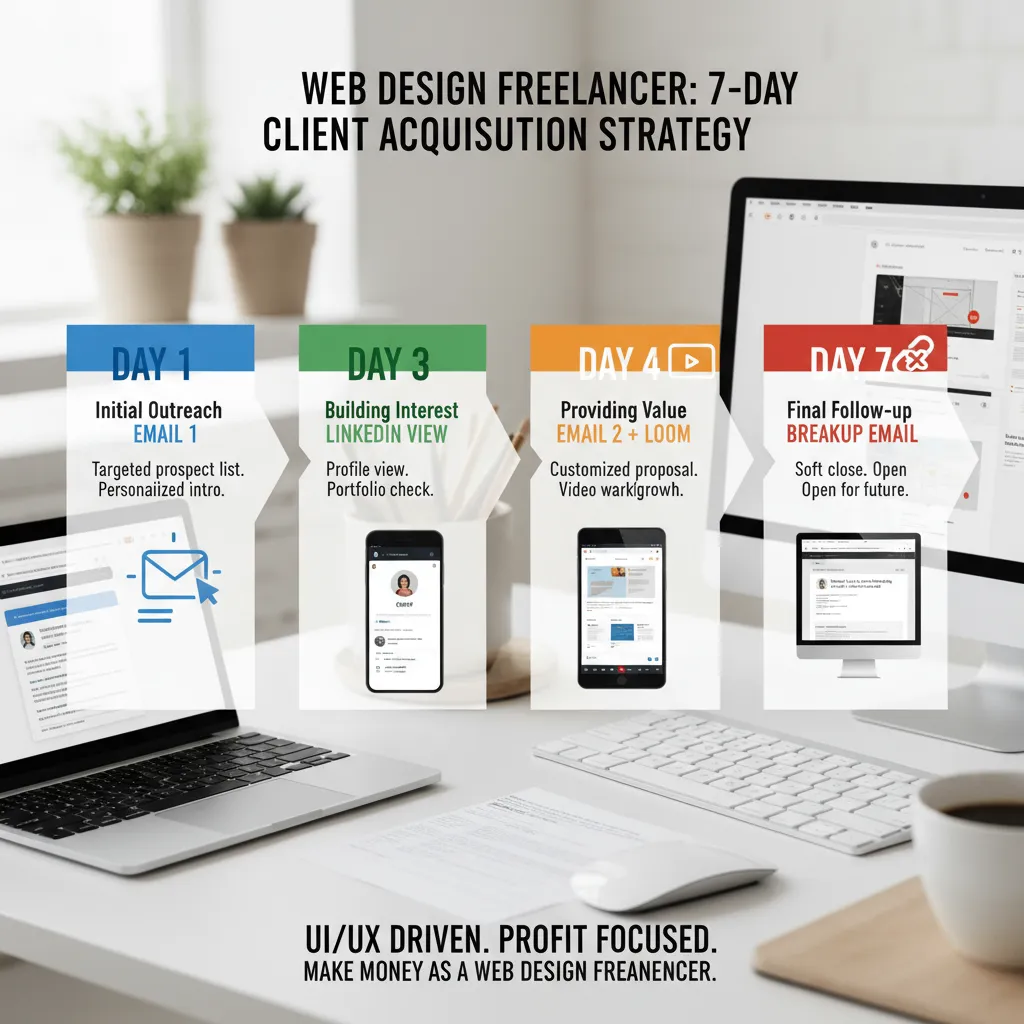
Step 3: The Multi-Touch Sequence
One email is never enough. Data from Woodpecker (Jan 2025) reveals that campaigns with 4-7 emails in a sequence see 3x higher reply rates (27%) than those with just 1-3 emails.
Furthermore, don’t rely solely on the inbox. Combining email with LinkedIn touches increases response rates by a staggering 287%, according to Martal Group benchmarks. Like a post, view their profile, then email them.
3 High-Converting Web Design Email Templates (Deconstructed)
Use these as frameworks, not copy-paste scripts. Remember, the algorithm hates identical emails.
Template 1: The “Broken Window” (High Response)
This works because it offers immediate value and alerts the owner to a problem.
Hi {{First_Name}},
I was trying to visit your site from my phone to check your pricing, but the menu button wasn’t working on the services page.
I recorded a 30-second video showing exactly where the break is so you can send it to your tech team: [Link to Loom Video].
I fix these kinds of UX issues for [Niche] businesses daily. If you don’t have someone to patch this up, let me know—I can handle it this afternoon.
Best,
[Your Name]
Template 2: The “Niche Authority” (Social Proof)
Use this when you have a relevant case study.
Hi {{First_Name}},
I’ve been following {{Company_Name}}’s growth on LinkedIn. Impressive work on the [Recent Project].
I’m reaching out because I just helped another local firm, [Competitor/Similar Client], increase their consultation bookings by 40% just by simplifying their landing page structure.
I sketched out a similar idea for your site. Mind if I send it over?
Cheers,
[Your Name]
Case Study: How Lemon.io Pivoted to Win
Sometimes, the key isn’t the channel, but the angle. Look at Lemon.io, a marketplace for developers. They faced stiff competition from giants like Toptal. According to Mails.ai 2024 case studies, Lemon.io didn’t just cold email people asking “Do you need devs?”
They pivoted to a specific pain point. They knew their prospects knew Toptal, but likely hated the high fees. Their outreach acknowledged the competitor but offered a “cost-effective alternative” with vetted quality. They used cold email to exploit a market inefficiency.
The Lesson: Don’t sell “Web Design.” Sell “A website that doesn’t crash” or “A site that converts better than your competitor’s.”
FAQ: Solving Common Cold Email Anxieties
Is sending cold emails illegal?
In the US, it is legal under the CAN-SPAM Act, provided you include a physical address and an opt-out mechanism. In Europe (GDPR), it is much stricter; you generally need a “legitimate interest” to contact B2B prospects, and the product must be relevant to their job role. Note: I am a writer, not a lawyer—always verify local laws.
What is the best time to send?
Don’t overthink this, but the data suggests mid-week mornings work best. Snov.io’s September 2025 benchmarks indicate the sweet spot is between 7-11 AM on Wednesday, with Thursday coming in second.
How many follow-ups should I send?
Don’t be annoying, but be persistent. Sending just one follow-up email can increase your reply rate by 49% according to Popupsmart data. I recommend a sequence of 3-4 emails max before recycling the lead.
Conclusion: The Pivot from Volume to Relevance
Does cold email still work for web design leads? Yes. In fact, for many agencies, it is the only thing that works consistently and predictably.
But the days of loading 1,000 leads into a blaster and hitting “send” are over. The 2025 winners are the ones who respect the inbox. They set up their DKIM/DMARC to satisfy Google, they keep their spam complaints under 0.3%, and most importantly, they treat every prospect like a human being, not a row on a spreadsheet.
Stop looking for the perfect subject line hack. Start looking for the broken link on your prospect’s website. That is how you win in 2025.