How to Find Your First Web Design Clients Fast (Proven 2025 Strategy)
The “Field of Dreams” approach—build it and they will come—is officially dead. I remember sitting in front of my shiny new portfolio site years ago, refreshing my inbox, waiting for a notification that never came. It’s a painful silence that many new freelancers know all too well.
Here is the reality: You can be the most talented designer on the block, but if you don’t have a client acquisition strategy, you don’t have a business; you have a hobby. But there is good news hiding in the data.
According to a 2024 survey by Forbes Advisor/Top Design Firms, 27% of small businesses still do not have a website, citing cost and technical complexity as their primary barriers.
That means nearly one in three businesses you walk past every day is a potential client. They won’t find you. You must find them. In this guide, I’m going to walk you through a 4-step “Rapid Acquisition Protocol” that focuses on active outreach over passive waiting.
We will cover everything from the “Trust-Bridge” strategy for your first three clients to the exact cold email scripts that are working right now. Let’s get to work.

Step 1: The “Trust-Bridge” Strategy (Your First 3 Clients)
If you have zero clients, aiming for a $10,000 corporate contract is a recipe for rejection. You need to build a “Trust Bridge”—using existing relationships to secure those crucial first testimonials.
Mining Your Warm Market (Without Being Annoying)
Most advice tells you to “ask your friends.” I hate that advice. It feels desperate. Instead, use the “Beta Tester” approach. You aren’t asking for charity; you are offering a limited-time opportunity.
I’ve used this exact framework to help mentees land their first paid gig within 48 hours. You are looking for a specific type of business owner in your network who needs a “version 1.0” site.
Subject: Quick question / favor?
Hey [Name],
I’m launching a new dedicated web design service for [Niche, e.g., local contractors] and I’m looking for 2-3 “Beta Testers” to build a portfolio case study around.
I’m offering to build a full 5-page site for just [Cost covering tools, e.g., $500], which is about 80% off my standard rate. The only catch is I need a brutally honest testimonial once we launch.
Do you know anyone in [Industry] who might be a good fit for this?
The “Digital Audit” Technique
Sometimes the easiest way to get a client is to fix a problem they don’t know they have. First impressions are brutal online. According to a study published by Taylor & Francis in Behaviour & Information Technology, users form an opinion about your website in just 0.05 seconds (50 milliseconds).
Use a tool like Hotjar or Google PageSpeed Insights to run a quick test on a local business site. Find one glaring error—a broken contact form, a slow load time, or a non-mobile responsive layout.
Mobile responsiveness is non-negotiable. Data from Statista’s 2024 Global Traffic Data shows that mobile devices now account for 58% of all global web traffic. If their site looks bad on a phone, they are losing money.
The “White Label” Pivot
If you hate sales, this is your golden ticket. White labeling involves working for other agencies (SEO firms, marketing agencies) who sell the website to the client but pay you to build it.
I’ve seen designers secure recurring revenue of $3k/month simply by handling overflow work for local SEO agencies. According to IBISWorld’s 2024 Industry Report, the Web Design Services market is projected to reach $61.23 billion in 2025. Agencies are overwhelmed; they need reliable hands.
Step 2: Cold Outreach That Actually Converts (Data-Backed)
Cold emailing gets a bad rap because most people do it wrong. They send generic, spammy templates that scream “delete me.”
The numbers back this up. The 2024 Belkins B2B Email Deliverability Report indicates that the average cold email response rate has dropped to 5.8%, down from 6.8% the previous year. To survive, you must hyper-personalize.
The “Video Loom” Pitch
This is the single most effective strategy I know for 2025. Instead of a text email, record a 3-minute video using Loom. Walk through their current site (or their competitor’s site) and show them exactly what is wrong and how you would fix it.
Research from Proposify’s State of Proposals 2024 shows that proposals and pitches that include a video walkthrough have a 41% higher close rate than text-only versions.
Subject: I made a video about [Company Name]’s website
Hi [Owner Name],
I was searching for [Service] in [City] today and landed on your site. I noticed it takes about 8 seconds to load on mobile—which Google penalizes heavily.
I recorded a 3-minute video showing exactly why this is happening and how fixing it could help you rank higher than [Competitor Name].
Here is the link: [Link to Loom Video]
No pressure, just wanted to share the insight.
Best,
[Your Name]
LinkedIn “Social Selling”
Forget Instagram for B2B. If you want high-paying clients, go where the money is. LinkedIn Marketing Solutions reports that 80% of B2B leads come from LinkedIn.
The strategy here isn’t to cold DM immediately. It’s to comment intelligently on their posts for a week, add them, and then reach out. It plays the long game, but the clients are higher quality.
Step 3: Where the Clients Hide (Platform Analysis)
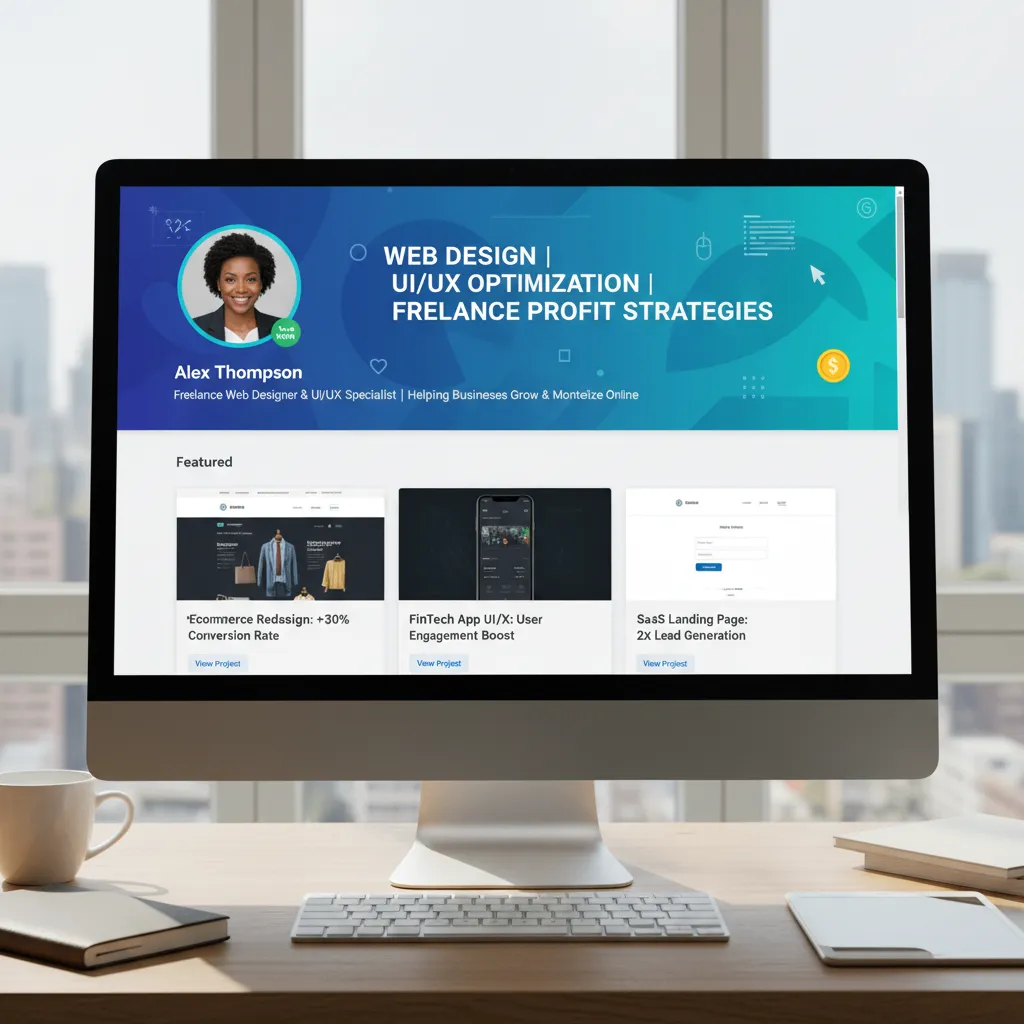
Should you use Upwork? Is Fiverr a race to the bottom? These are the questions that keep freelancers up at night. The gig economy is massive—the Upwork Freelance Forward 2024 Report notes that 28% of the U.S. knowledge workforce engaged in freelance work last year.
Winning on Upwork with 0 Reviews
I’ve hired dozens of freelancers on Upwork. The ones who win aren’t always the ones with the most reviews; they are the ones who actually read the job post.
The Secret: Start your proposal with the phrase, “I see you are looking for…” and repeat their specific problem back to them. It proves you aren’t a bot.
The Power of Niching Down
Generalists compete on price. Specialists compete on value. If you brand yourself as “The Web Designer for Dentists,” you instantly eliminate 99% of your competition.
Data from the Bonsai Freelance Rate Explorer confirms that freelancers who specialize charge on average 20-30% more than generalists. Pick a lane—Real Estate, HVAC, Bakeries—and own it.
Step 4: Closing the Deal (Pricing & Proposals)
You got the lead. Now, how do you get paid without getting ripped off?
Value-Based Pricing
Stop charging by the hour. If you charge $50/hour and you are fast, you get penalized for being good. As Chris Do from The Futur famously says, “Price the client, not the job.”
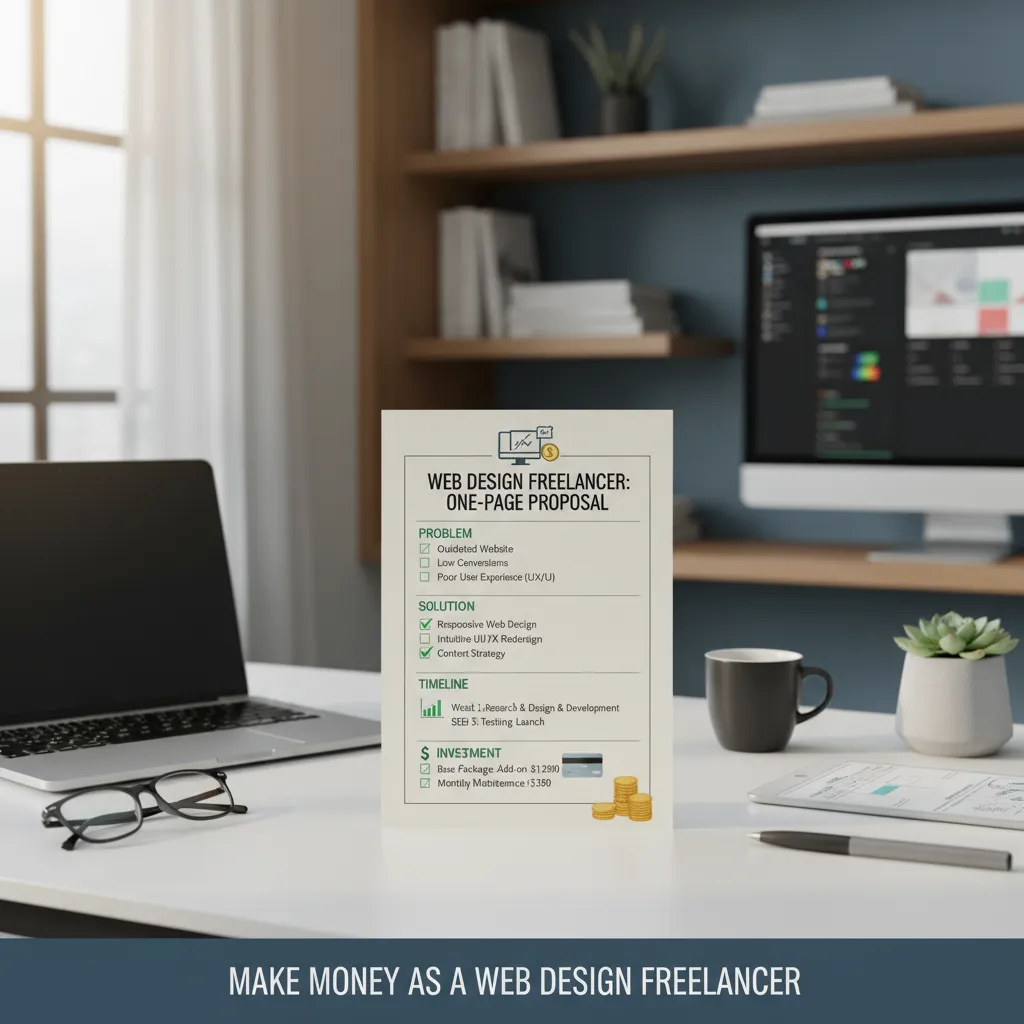
According to the WebFX Pricing Guide 2024, the average cost for a basic small business website ranges between $2,000 and $9,000. Don’t be afraid to quote $3,000 for a project that solves a major business problem.
Legal Essentials: The Contract
Never start work without a contract. I’ve learned this the hard way through scope creep that turned a 2-week project into a 2-month nightmare.
You don’t need a lawyer to draft one from scratch. Use the AIGA Standard Form of Agreement for Design Services. It’s the industry standard and protects you regarding intellectual property rights and payment schedules.
Selling Without a Portfolio: The “Impostor Syndrome” Gap
This is the most common mental block I see. “How can I get clients if I have nothing to show?”
The answer is Spec Work (Speculative Work). Do not wait for a client to give you permission to design. Look at a local non-profit or a favorite restaurant with a terrible site. Redesign their homepage. Do it for free, on your own time.
Charli Marie, a design educator, puts it perfectly: “Your portfolio doesn’t need 20 projects. It needs 3 case studies that show your process, the problem you solved, and the result you achieved.”
Three solid spec projects are infinitely better than zero real client projects.
Frequently Asked Questions (FAQ)
1. How much should a beginner charge for a website?
For your very first “beta” client, cover your costs or charge a nominal fee (e.g., $500). Once you have a portfolio piece, immediately jump to market rates. Most beginners should target the $1,500 – $3,000 range for a standard 5-page business site.
2. Is cold emailing still effective in 2025?
Yes, but only if personalized. As noted earlier, generic blasts have a sub-6% response rate. However, hyper-targeted emails with video audits (Loom) are seeing resurgence because they offer upfront value before asking for the sale.
3. Do I need to code to sell web design?
No. With the rise of “No-Code” platforms like Webflow and robust builders like Elementor (WordPress), the barrier is design thinking, not coding syntax. W3Techs data shows WordPress powers over 40% of the web—clients care about the result, not the code.
Conclusion: The “Monday Morning” Action Plan
Finding web design clients isn’t about luck. It’s about volume and value. If you send 50 personalized video audits, I guarantee you will get responses. It is a numbers game titled in favor of those who put in the effort.
🚀 Your Action Plan for This Week:
- Monday: Identify your niche and update your LinkedIn headline.
- Tuesday: Create 3 “Spec Work” homepage redesigns for your portfolio.
- Wednesday: Record 5 Loom video audits for local businesses with poor mobile sites.
- Thursday: Send those 5 videos via email or LinkedIn DM.
- Friday: Follow up on any responses and ask your personal network for “Beta Testers.”
You have the skills. The market has the need ($61 billion worth). Now, go bridge the gap.