10 Data-Backed Negotiation Tips to Secure More Design Projects (2025 Edition)
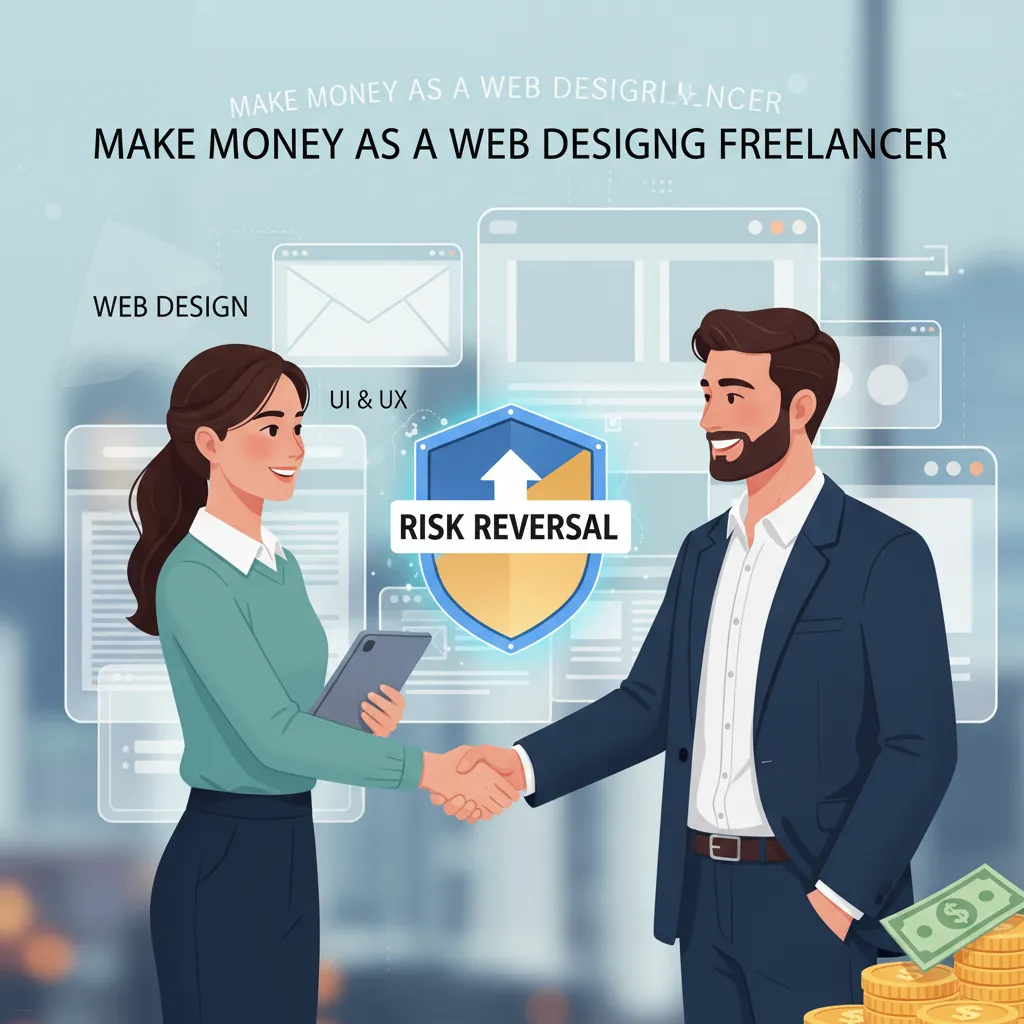
We need to talk about the elephant in the room: Risk.
In my decade of running a design consultancy, I’ve realized that most creatives think negotiation is about “convincing” a client to part with their money. But the data tells a completely different story. It’s not about greed; it’s about fear.
According to HubSpot’s 2024 State of Sales Report, a staggering 62% of sales professionals report that organizations are taking fewer risks in the current market than in previous years. In a risk-averse economy, your slick portfolio gets you to the door, but your ability to negotiate safety, reliability, and ROI is what unlocks it.
Clients aren’t necessarily cheap. They are terrified of making a bad investment.
If you are still sending over a generic PDF quote and hoping for the best, you are leaving thousands of dollars on the table. It’s time to shift from being an “expense” to an “investment.” Below, I’ve compiled the definitive, data-backed negotiation guide for designers who are ready to stop begging for work and start closing premium contracts.
The Pre-Negotiation Phase: Positioning for Power
1. Move from “Vendor” to “Expert Consultant”
The moment you agree to a client’s prescribed solution without diagnosis, you become a commodity. Commodities compete on price; experts compete on value.
Blair Enns, author of The Win Without Pitching Manifesto, puts it perfectly in his 2024 blog insights: “Expertise is the only valid basis for differentiating ourselves from the competition. Not personality. Not process. Not price.”
When a client approaches you saying, “I need a logo,” the vendor says, “Okay, that’s $500.” The expert asks, “Why do you think you need a logo right now? What business problem are we trying to solve?”
This simple shift engages the pricing psychology of authority. You are no longer an order taker; you are a diagnostician. You cannot negotiate effectively if you are seen as a pair of hands rather than a strategic brain.
2. The “Anchor Price” Strategy
Never present a single price. In my experience, giving a client one number is an ultimatum: “Take it or leave it.” Instead, you must use tiered pricing options.
This leverages a psychological phenomenon known as “Anchoring.” If you present a premium option first (e.g., $15,000 for a full brand overhaul), your standard option (e.g., $8,500 for identity design) feels significantly safer and more reasonable.
A freelance web designer I mentored recently quoted a project with three tiers: $5,000, $8,500, and $15,000. The client, who initially claimed a $4,000 budget, selected the $8,500 option. Why? Because the $15k anchor made the middle option feel like the smart, safe compromise. General sales psychology indicates tiered pricing can increase Average Order Value (AOV) by up to 17%.
Mastering the Discovery Call
3. The 70/30 Listening Rule
Nerves make us talk too much. We want to prove we know our stuff by listing every Adobe shortcut we know. Stop it.
Effective client discovery sessions are about extraction, not projection. According to HubSpot’s 2025 Sales Trends, top performers listen more than they speak. Aim for a 70/30 split—let the client talk 70% of the time.
The more they talk about their pain points, the more ammunition you have to justify your value-based pricing model later. If they admit that their bad website is costing them $10,000 a month in lost leads, your $15,000 redesign is no longer expensive—it’s a bargain.
4. Uncovering the Budget (Without the Awkwardness)
One of the most common questions I get is, “How do I ask for their budget?” If you ask too early, you look greedy. If you don’t ask, you waste time.
Here is a script that works 90% of the time to reveal the budget bracket:
“I’ve worked on projects similar to this that ranged from $5,000 to $20,000 depending on the scope and deliverables. Where does your organization sit on that spectrum?”
This technique, known as “bracketing,” allows the client to correct you without feeling pressured to give an exact number. They might say, “Oh, we are definitely closer to the $5k end,” or “We have budget, so we want the higher end.” Both answers are gold for your negotiation strategy.
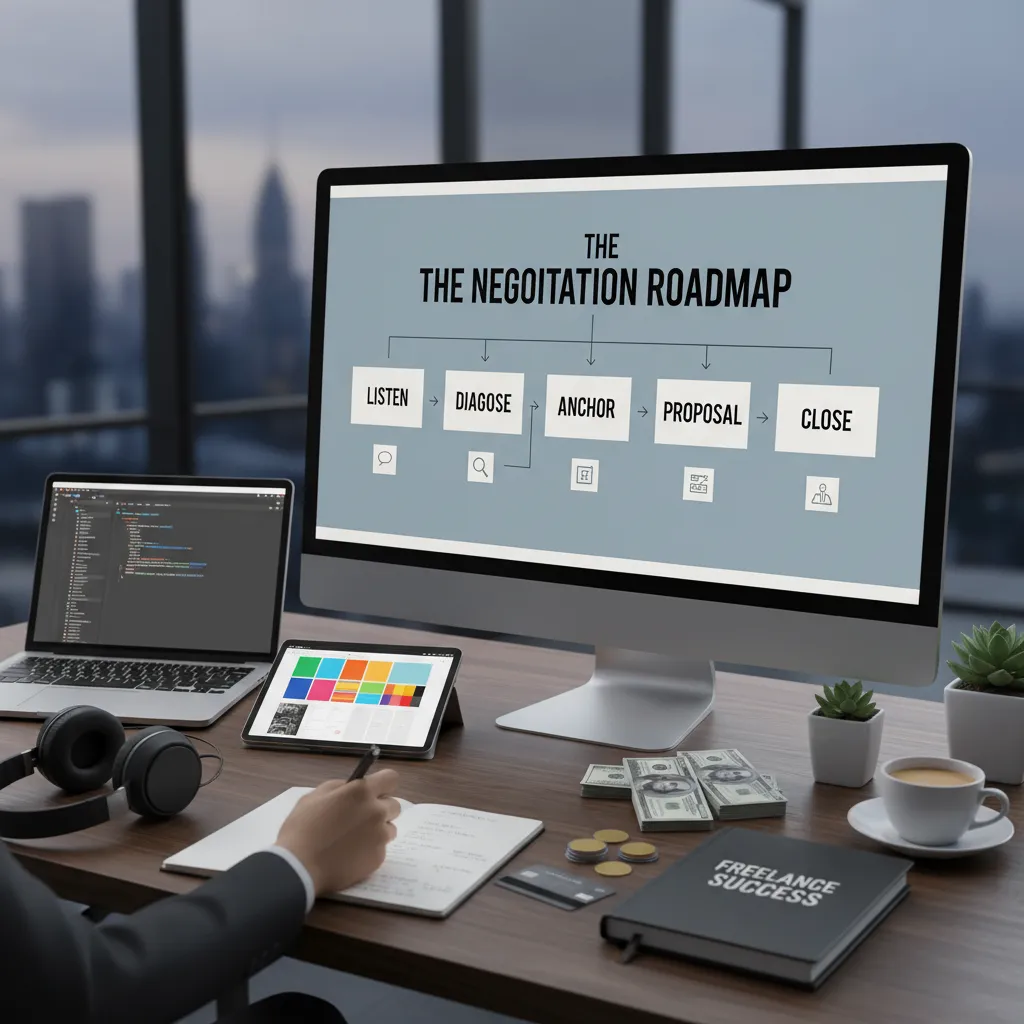
Structuring the Proposal to Close
5. Video Proposals vs. Static PDF
We are in a visual industry, yet we send boring text contracts. In 2025, sending a Loom or video walkthrough of your proposal is a massive competitive advantage.
Data from HubSpot’s 2025 Sales Trends indicates that 71% of prospects prefer independent research over talking to a rep immediately. A video allows them to watch your pitch, hear your passion, and understand your design ROI calculation without the pressure of a live call. It humanizes the numbers.
6. Identifying the Real Decision Maker
There is nothing worse than nailing a pitch, only to hear, “I need to show this to my boss.”
According to HubSpot’s 2024 State of Sales Report, there is an average of five decision-makers involved in every B2B sales process today. You cannot assume the person on the phone holds the checkbook.
Action Step: Early in the conversation, ask: “Who else besides yourself will be weighing in on the final decision for this project?” If they say their boss, ask to have the boss present for the proposal presentation. Never let a middleman sell your services for you.
Handling Objections Like a Pro
7. “It’s Too Expensive” – Reframing Cost
When a client says “it’s too expensive,” they aren’t saying they don’t have money. They are saying they don’t see the value. This is where you must leverage pricing psychology.
Chris Do, founder of The Futur, famously notes in his 2024 content: “In negotiation, there is no penalty for saying a number that is too big. But if you agree to a price cut without reducing scope, you signal that you were trying to rip them off initially.”
If they push back on price, do not lower your rate. Instead, remove project deliverables. “I understand the budget is tight. We can get closer to that number if we remove the three rounds of revisions and the secondary logo variations.”
This protects your value. You are not “discounting”; you are resizing the suit to fit the budget.
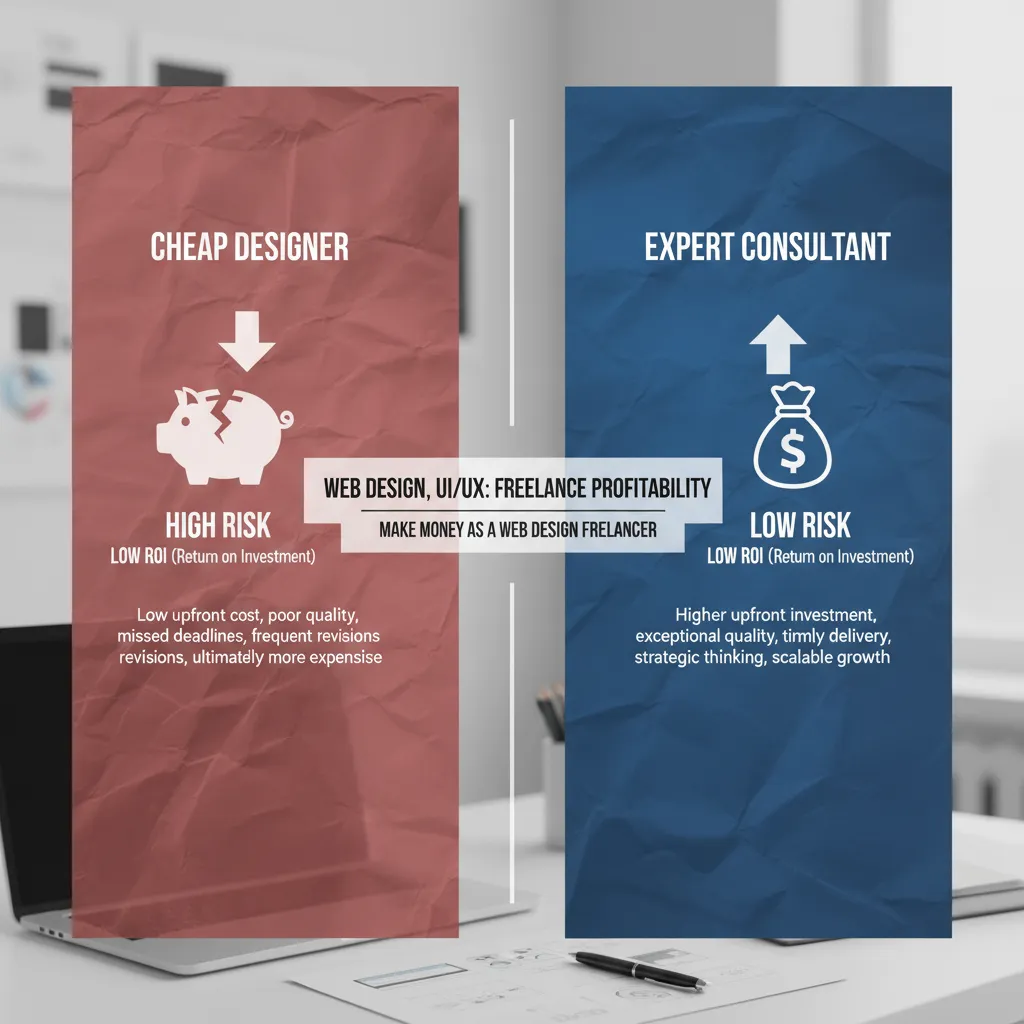
8. “We Can Find Someone Cheaper on Upwork”
This is the classic commoditization trap. Don’t get defensive. Agree with them.
“You are absolutely right. You can find someone cheaper. But let’s look at the risks.”
According to GoodFirms via Influencer Marketing Hub (2024), 88.5% of users will abandon a website due to slow loading or poor design. A cheap designer focuses on aesthetics; you focus on performance and conversion. Ask the client: “Is it worth saving $500 now to risk losing 88% of your traffic later?”
Furthermore, Fiverr’s 2024 Freelance Economic Impact Report shows that nearly 90% of clients want professionals with specialized skills rather than generalists. Position yourself as that specialist.
Closing the Deal & The Contract
9. Essential Clauses: Scope Creep and Kill Fees
I learned this the hard way: A contract without a scope creep protection clause is a donation of your time. Clients will naturally ask for “just one more change.”
Your contract must clearly define the number of revisions. More importantly, you need a kill fee structure. If a client cancels the project halfway through because “corporate strategy changed,” you must be paid for the work reserved, not just the work done.
Additionally, clarify intellectual property rights transfer. Are they paying for the final files, or the working files? Negotiating usage rights separately can be a great way to upsell later.
10. The Deposit (The Assumptive Close)
Never start work without a deposit. It is the industry standard for design deposit negotiation to require 50% upfront. This isn’t just about cash flow; it’s about commitment.
According to Matomo/Unbounce’s 2024 Conversion Benchmark Report, creative service landing pages have a conversion rate of just 8.8%. This means “maybe” leads rarely turn into “yes” leads. A deposit turns a “maybe” into a project.
Use the “Assumptive Close.” Don’t ask, “Do you want to proceed?” Say, “I’ve attached the invoice for the 50% deposit. Once that hits our account, we will schedule the kickoff call for Tuesday.”
Interactive: Minimum Rate Calculator
Before you negotiate, you must know your “Walk Away” number. Use this simple calculator to determine the absolute minimum hourly rate you need to survive.
Frequently Asked Questions
How do I justify my design rates to a client?
Focus on ROI rather than hours worked. Reference Gauss Development’s 2024 data showing 94% of first impressions relate to design. Explain that your rate includes strategic research, risk mitigation, and technical optimization, not just “drawing.”
What is the industry standard for design deposit negotiation?
The standard is 50% upfront before work begins, and 50% upon completion (before final file delivery). For larger projects over $10k, a 33/33/33 split (Deposit, Milestone, Completion) is common to maintain cash flow.
Should I lower my price to get a design portfolio piece?
Generally, no. Upwork’s Freelance Forward 2024 report notes that freelancers are contributing over $1.27 trillion to the economy; the market is healthy. If you must lower the price for a portfolio piece, ask for full creative freedom in exchange. Never discount for “exposure” alone.
How do you handle ‘I need to ask my boss’ in negotiations?
Acknowledge it, but maintain control. “I understand. Since there are usually specific questions regarding the strategic approach, would it be possible to set up a brief 15-minute call with you and your boss to answer those directly?” This prevents your message from getting diluted.
Conclusion: Your Confidence is the Variable
Negotiation isn’t a battle; it’s a bridge. It’s how you get from where the client is (problem/risk) to where they want to be (solution/safety).
The data from 2024 and 2025 is clear: The freelance economy is booming, but clients are more scrutiny-heavy than ever. HubSpot found that 70% of sales pros see tighter budget scrutiny this year. This isn’t a bad thing for you. It means that the “cheap and cheerful” designers are getting filtered out.
By using the Anchor Price strategy, diagnosing before prescribing, and standing firm on your scope, you position yourself not as a risk, but as the safest bet in the room.
Review the scripts above. Practice them out loud. The next time a client asks for a discount, don’t panic. Remember that you are the expert, and experts don’t need to apologize for their value.